
Solutions- Practice Set and Problem Sets
Practice set 8.1 :
Question 1.1. In the Fig., ∠ R is the right angle of Δ PQR. Write the following ratios.
(i) sin P (ii) cos Q (iii) tan P (iv) tan Q
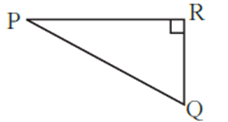
(i) sin P = \(\frac{\text{Opposite side of ∠ P}}{Hypotenuse}\) = \(\frac{RQ}{PQ}\)
(ii) cos Q = \(\frac{\text{Adjacent side of ∠ Q}}{Hypotenuse}\) = \(\frac{RQ}{PQ}\)
(iii) tan P = \(\frac{\text{Opposite side of ∠ P}}{\text{Adjacent side of ∠ P}}\) = \(\frac{RQ}{PR}\)
(iv) tan Q = \(\frac{\text{Opposite side of ∠ Q}}{\text{Adjacent side of ∠ Q}}\) = \(\frac{PR}{RQ}\)
Question 1.2. In the right angled Δ XYZ, ∠XYZ = 90° and a,b,c are the lengths of the sides as shown in the figure. Write the following ratios,
(i) sin X (ii) tan Z (iii) cos X (iv) tan X.
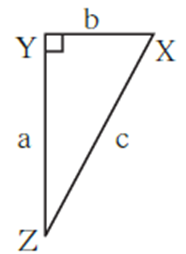
(i) sin X = \(\frac{\text{Opposite side of ∠ X}}{Hypotenuse}\) ∴ sin X = \(\frac{YZ}{ZX}\) = \(\frac{a}{c}\)
(ii) tan Z = \(\frac{\text{Opposite side of ∠ Z}}{\text{Adjacent side of ∠ Z}}\) ∴ tan Z = \(\frac{YX}{YZ}\) = \(\frac{b}{a}\)
(iii) cos X = \(\frac{\text{Adjacent side of ∠ X}}{Hypotenuse}\) ∴ cos X = \(\frac{YX}{ZX}\) = = \(\frac{b}{c}\)
(iv) tan X = \(\frac{\text{Opposite side of ∠ X}}{\text{Adjacent side of ∠ X}}\) ∴ tan X = \(\frac{YZ}{YX}\) = \(\frac{a}{b}\)
Question 1.3. In right angled Δ LMN, ∠ LMN = 90° ∠ L = 50° and ∠ N = 40°, write the following ratios. (i) sin 50° (ii) cos 50° (iii) tan 40° (iv) cos 40°
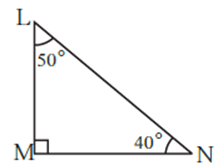
(i) sin 50° = sin L = \(\frac{\text{Opposite side of ∠ L}}{Hypotenuse}\) ∴ sin 50° = \(\frac{MN}{LN}\)
(ii) cos 50° = cos L = \(\frac{\text{Adjacent side of ∠ L}}{Hypotenuse}\) ∴ cos 50° = \(\frac{LM}{LN}\)
(iii) tan 40° = tan N = \(\frac{\text{Opposite side of ∠ N}}{\text{Adjacent side of ∠ N}}\) ∴ tan N = \(\frac{LM}{MN}\)
(iv) cos 40° = cos N = \(\frac{\text{Adjacent side of ∠ N}}{Hypotenuse}\) ∴ cos 40° = \(\frac{MN}{LN}\)
Question 1.4. In the fig., ∠ PQR = 90°, ∠ PQS = 90°, ∠ PRQ = α and ∠ QPS = θ. Write the following trigonometric ratios.
(i) sin α, cos α, tan α
(ii) sin θ, cos θ, tan θ
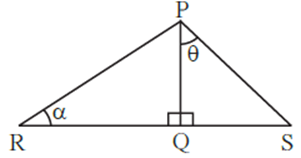
(i) sin α = sin ∠ PRQ = \(\frac{\text{Opposite side of ∠ R}}{Hypotenuse}\) ∴ sin α = \(\frac{PQ}{PR}\)
cos α = cos ∠ PRQ = \(\frac{\text{Adjacent side of ∠ R}}{Hypotenuse}\) ∴ cos α = \(\frac{RQ}{PR}\)
tan α = tan ∠ PRQ = \(\frac{\text{Opposite side of ∠ R}}{\text{Adjacent side of ∠ R}}\) ∴ tan α = \(\frac{PQ}{RQ}\)
(ii) sin θ = sin ∠ SPQ = \(\frac{\text{Opposite side of ∠ P}}{Hypotenuse}\) ∴ sin θ = \(\frac{QS}{PS}\)
cos θ = cos ∠ SPQ = \(\frac{\text{Adjacent side of ∠ P}}{Hypotenuse}\) ∴ cos θ = \(\frac{PQ}{PS}\)
tan θ = tan ∠ SPQ = \(\frac{\text{Opposite side of ∠ P}}{\text{Adjacent side of ∠ P}}\) ∴ tan θ = \(\frac{QS}{PQ}\)
Practice set 8.2 :
Question 2.1. In the following table, a ratio is given in each column. Find the remaining two ratios in the column and complete the table.
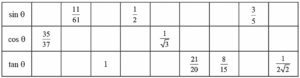
From above table
(i) sin θ = ?, cos θ = \(\frac{35}{37}\) , tan θ = ?
cos θ = \(\frac{35}{37}\)
sin2θ + cos2θ = 1
sin2θ = 1- cos2θ
= \(1-(\frac{35}{37})^2\)
= \((1-\frac{35}{37})(1+\frac{35}{37})\)
= \((\frac{37-35}{37})(\frac{37+35}{37})\)
= \((\frac{2}{37})(\frac{72}{37})\)
∴ sin2θ = \(\frac{2×2×36}{37×37}\) = \(\frac{2^2×6^2}{37^2}\)
∴ sin θ = \(\frac{2×6}{37}\) = \(\frac{12}{37}\)
tan θ = \(\frac{sin,θ}{cos,θ}\) = \(\frac{12/37}{35/37}\) = \(\frac{12}{35}\)
∴ sin θ = \(\frac{12}{37}\) , tan θ = \(\frac{12}{35}\)
(ii) sin θ = \(\frac{11}{61}\) , cos θ = ? , tan θ = ?
sin2θ + cos2θ = 1
cos2θ = 1- sin2θ
= \(1-(\frac{11}{61})^2\)
= \(1-\frac{121}{3721}\)
= \(\frac{3721-121}{3721}\)
= \(\frac{3600}{3721}\)
= \((\frac{60}{61})^2\)
∴ cos θ = \(\frac{60}{61}\)
tan θ = \(\frac{sin,θ}{cos,θ}\) = \(\frac{11/61}{60/61}\) = \(\frac{11}{60}\)
∴ cos θ = \(\frac{60}{61}\) , tan θ = \(\frac{11}{60}\)
(iii) sin θ = ?, cos θ = ?, tan θ = 1
tan θ = \(\frac{sin,θ}{cos,θ}\)
1 = \(\frac{sin,θ}{cos,θ}\)
∴ cos θ = sin θ …..(1)
sin2θ + cos2θ = 1
sin2θ + sin2θ = 1 ….[ from (1)]
2sin2θ = 1
∴ sin2θ = \(\frac{1}{2}\)
∴ sin θ = = cos θ
∴ sin θ = \(\frac{1}{\sqrt{2}}\), cos θ = \(\frac{1}{\sqrt{2}}\)
(iv) sin θ = \(\frac{1}{2}\) , cos θ = ? , tan θ = ?
sin2θ + cos2θ = 1
\((\frac{1}{2})^2\) + cos2θ = 1
\(\frac{1}{4}\) + cos2θ = 1
∴ cos2θ = 1 - \(\frac{1}{4}\) = \(\frac{4-1}{4}\) = \(\frac{3}{4}\)
∴ cos θ = \(\frac{\sqrt{3}}{2}\)
tan θ = \(\frac{sin,θ}{cos,θ}\)
= \(\frac{1/2}{\sqrt{3}/2}\)
= \(\frac{1}{\sqrt{3}}\)
∴ cos θ = \(\frac{\sqrt{3}}{2}\) , tan θ = \(\frac{1}{\sqrt{3}}\)
(v) sin θ = ?, cos θ = \(\frac{1}{\sqrt{3}}\) , tan θ = ?
sin2θ + cos2θ = 1
∴ sin2θ + \((\frac{1}{\sqrt{3}})^2\) = 1
∴ sin2θ + \(\frac{1}{3}\) = 1
∴ sin2θ = 1 - \(\frac{1}{3}\) = \(\frac{3-1}{3}\) = \(\frac{2}{3}\)
∴ sin θ = \(\frac{\sqrt{2}}{\sqrt{3}}\)
tan θ = \(\frac{sin,θ}{cos,θ}\) = \(\frac{\sqrt{2}/\sqrt{3}}{1/\sqrt{3}}\) = \(\sqrt{2}\)
∴ sin θ =\(\frac{\sqrt{2}}{\sqrt{3}}\), tan θ = \(\sqrt{2}\)
(vi) sin θ = ?, cos θ = ? , tan θ = \(\frac{21}{20}\)
tan θ = \(\frac{sin,θ}{cos,θ}\)
∴ \(\frac{21}{20}\) = \(\frac{sin,θ}{cos,θ}\)
∴ \(\frac{21}{20}\)cos θ = sin θ ….(1)
sin2θ + cos2θ = 1
\((\frac{21}{20})^2\)cos2θ + cos2θ = 1 ….[from (1)]
∴ \(\frac{441}{400}\)cos2θ + cos2θ = 1
∴ \(\frac{441\,cos^2θ+400\,cos^2θ}{400}\) = 1
∴ \(\frac{841\,cos^2θ}{400}\) = 1
∴ cos2θ = \(\frac{400}{841}\) = \((\frac{20}{29})^2\)
∴ cos θ = \(\frac{20}{29}\)
\(\frac{21}{20}\) x \(\frac{20}{29}\) = sin θ ….[from (1)]
∴ sin θ = \((\frac{21}{29}\)
∴ cos θ = \(\frac{20}{29}\) , sin θ = \(\frac{21}{29}\)
(vii) sin θ = ?, cos θ = ? , tan θ = \(\frac{8}{15}\)
tan θ = \(\frac{sin,θ}{cos,θ}\)
∴ \(\frac{8}{15}\) = \(\frac{sin,θ}{cos,θ}\)
∴ \(\frac{8}{15}\)cos θ = sin θ ….(1)
sin2θ + cos2θ = 1
\((\frac{8}{15})^2\)cos2θ + cos2θ = 1 ….[from (1)]
∴ \(\frac{64}{225}\)cos2θ + cos2θ = 1
∴ \(\frac{64\,cos^2θ+225\,cos^2θ}{225}\) = 1
∴ \(\frac{289\,cos^2θ}{225}\) = 1
∴ cos2θ = \(\frac{225}{289}\) = \((\frac{15}{17})^2\)
∴ cos θ = \(\frac{15}{17}\)
\(\frac{8}{15}\) x \(\frac{15}{17}\) = sin θ ….[from (1)]
∴ sin θ = \(\frac{8}{17}\)
∴ cos θ = \(\frac{15}{17}\) , sin θ = \(\frac{8}{17}\)
(viii) sin θ = \(\frac{3}{5}\), cos θ = ? , tan θ = ?
sin2θ + cos2θ = 1
\((\frac{3}{5})^2\) + cos2θ = 1
\(\frac{9}{25}\) + cos2θ = 1
∴ cos2θ = 1 - \(\frac{9}{25}\) = \(\frac{25-9}{25}\) = \(\frac{16}{25}\)
∴ cos θ = \(\frac{4}{5}\)
tan θ = \(\frac{sin,θ}{cos,θ}\)
= \(\frac{3/5}{4/5}\)
= \(\frac{3}{4}\)
∴ cos θ = \(\frac{4}{5}\), tan θ = \(\frac{3}{4}\)
(ix) sin θ = ?, cos θ = ?, tan θ = \(\frac{1}{2\sqrt{2}}\)
tan θ = \(\frac{sin,θ}{cos,θ}\)
∴ \(\frac{1}{2\sqrt{2}}\) = \(\frac{sin,θ}{cos,θ}\)
∴ \(\frac{1}{2\sqrt{2}}\)cos θ = sin θ ….(1)
sin2θ + cos2θ = 1
\((\frac{1}{2\sqrt{2}})^2\)cos2θ + cos2θ = 1 ….[from (1)]
∴ \(\frac{1}{8}\)cos2θ + cos2θ = 1
∴ \(\frac{9}{8}\)cos2θ = 1
∴ cos2θ = \(\frac{8}{9}\)
∴ cos θ = \(\frac{2\sqrt{2}}{3}\)
\(\frac{1}{2\sqrt{2}}\) x \(\frac{2\sqrt{2}}{3}\) = sin θ ….[from (1)]
∴ sin θ = \(\frac{1}{3}\)
∴ cos θ = \(\frac{2\sqrt{2}}{3}\) , sin θ = \(\frac{1}{3}\)
Answer : Completed Table :
| sin θ | \(\frac{12}{37}\) | \(\frac{11}{61}\) | \(\frac{1}{\sqrt{2}}\) | \(\frac{1}{2}\) | \(\frac{\sqrt{2}}{\sqrt{3}}\) | \(\frac{21}{29}\) | \(\frac{8}{17}\) | \(\frac{3}{5}\) | \(\frac{1}{3}\) |
| cos θ | \(\frac{35}{37}\) | \(\frac{60}{61}\) | \(\frac{1}{\sqrt{2}}\) | \(\frac{\sqrt{3}}{2}\) | \(\frac{1}{\sqrt{3}}\) | \(\frac{20}{29}\) | \(\frac{15}{17}\) | \(\frac{4}{5}\) | \(\frac{2\sqrt{2}}{3}\) |
| tan θ | \(\frac{12}{35}\) | \(\frac{11}{60}\) | 1 | \(\frac{1}{\sqrt{3}}\) | \(\sqrt{2}\) | \(\frac{21}{20}\) | \(\frac{8}{15}\) | \(\frac{3}{4}\) | \(\frac{1}{2\sqrt{2}}\) |
Question 2.2. Find the values of -
(i) 5sin 30° + 3tan 45°
sin 30° = \(\frac{1}{2}\), tan 45° = 1
∴ 5sin 30° + 3tan 45° = 5 x \(\frac{1}{2}\) + 3 x 1
= \(\frac{5}{2}\) + 3
= \(\frac{5+6}{2}\)
= \(\frac{11}{2}\)
(ii) \(\frac{4}{5}\)tan260° + 3sin260°
sin 60° = \(\frac{\sqrt{3}}{2}\), tan 60° = \(\sqrt{3}\)
∴ \(\frac{4}{5}\) tan260° + 3sin260° = \(\frac{4}{5}\)\((\sqrt{3})^2\) + 3 x \((\frac{\sqrt{3}}{2})^2\)
= \(\frac{12}{5}\) + \(\frac{9}{4}\)
= \(\frac{12×4+9×5}{20}\)
= \(\frac{93}{20}\)
(iii) 2sin 30° + cos 0° + 3sin 90°
sin 30° = \(\frac{1}{2}\), cos 0° = 1, sin 90° = 1
∴ 2sin 30° + cos 0° + 3sin 90° = 2 x \(\frac{1}{2}\) + 1 + 3 x 1
= 1 + 1 + 3 = 5
(iv) \(\frac{tan\,60°}{sin\,60°+cos\,60°}\)
tan 60° = \(\sqrt{3}\), sin 60° = \(\frac{\sqrt{3}}{2}\), cos 60° = \(\frac{1}{2}\)
∴ \(\frac{tan\,60°}{sin\,60°+cos\,60°}\) = \(\frac{\sqrt{3}}{\frac{\sqrt{3}}{2}+\frac{1}{2}}\)
= \(\frac{\sqrt{3}}{\frac{\sqrt{3}+1}{2}}\)
= \(\frac{2\sqrt{3}}{\sqrt{3}+1}}\)
(v) cos2 45° + sin2 30°
cos 45° = \(\frac{1}{\sqrt{2}}\), sin 30° = \(\frac{1}{2}\)
cos2 45° + sin2 30° = \((\frac{1}{\sqrt{2}})^2\) + \((\frac{1}{2})^2\)
= \(\frac{1}{2}\) + \(\frac{1}{4}\) = \(\frac{3}{4}\)
(vi) cos 60° × cos 30° + sin 60° × sin 30°
cos 60° = \(\frac{1}{2}\), cos 30° = \(\frac{\sqrt{3}}{2}\), sin 60° = \(\frac{\sqrt{3}}{2}\), sin 30° = \(\frac{1}{2}\)
cos 60° × cos 30° + sin 60° × sin 30°
= \(\frac{1}{2}\) × \(\frac{\sqrt{3}}{2}\) + \(\frac{\sqrt{3}}{2}\) × \(\frac{1}{2}\)
= \(\frac{\sqrt{3}}{4}\) + \(\frac{\sqrt{3}}{4}\)
= \(\frac{\sqrt{3}}{2}\)
Question 2.3. If sin θ = \(\frac{4}{5}\) then find cos θ
sin2θ + cos2θ = 1
\((\frac{4}{5})^2\) + cos2θ = 1
\(\frac{16}{25}\) + cos2θ = 1
∴ cos2θ = 1 - \(\frac{16}{25}\) = \(\frac{25-16}{25}\) = \(\frac{9}{25}\)
∴ cos θ = \(\frac{3}{5}\)
Question 2.4. If cos θ = \(\frac{15}{17}\) then find sin θ
sin2θ + cos2θ = 1
∴ sin2θ + \((\frac{15}{17})^2\) = 1
∴ sin2θ + \(\frac{225}{289}\) = 1
∴ sin2θ = 1 - \(\frac{225}{289}\) = \(\frac{289-225}{289}\) = \(\frac{64}{289}\)
∴ sin θ = \(\frac{8}{17}\)
Problem set 8 :
Question 1. Choose the correct alternative answer for following multiple choice questions.
(i) Which of the following statements is true ?
(A) sin θ = cos (90- θ)
(B) cos θ = tan (90 - θ)
(C) sin θ = tan (90 - θ)
(D) tan θ = tan (90 - θ)
(A) sin θ = cos (90- θ)
(ii) Which of the following is the value of sin 90° ?
(A) \(\frac{3}{2}\) (B) 0 (C) \(\frac{1}{2}\) (D) 1
(D) 1
(iii) 2 tan 45° + cos 45° - sin 45° = ?
(A) 0 (B) 1 (C) 2 (D) 3
(C) 2
(iv) \(\frac{cos\,28º}{sin\,62º}\) = ?
(A) 2 (B) -1 (C) 0 (D) 1
(D) 1
Question 2. In right angled Δ TSU, TS = 5, ∠S = 90°, SU = 12 then find sin T, cos T, tan T. Similarly find sin U, cos U, tan U.
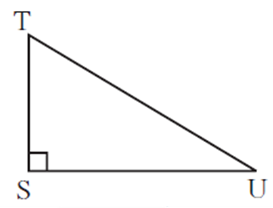
In right angled Δ TSU, by Pythagoras theorem,
TU2 = TS2 + SU2
= (5)2 + (12)2 = 25 + 144
∴ TU2 = 169 = (13)2
∴ TU = 13
(i) sin T = \(\frac{\text{Opposite side of ∠ T}}{Hypotenuse}\) ∴ sin T = \(\frac{SU}{TU}\) = \(\frac{12}{13}\)
(ii) cos T = \(\frac{\text{Adjacent side of ∠ T}}{Hypotenuse}\) ∴ cos T = \(\frac{TS}{TU}\) = \(\frac{5}{13}\)
(iii) tan T = \(\frac{\text{Opposite side of ∠ T}}{\text{Adjacent side of ∠ T}}\) ∴ tan T = \(\frac{SU}{TS}\) = \(\frac{12}{5}\)
(iv) sin U = \(\frac{\text{Opposite side of ∠ U}}{Hypotenuse}\) ∴ sin U = \(\frac{TS}{TU}\) = \(\frac{5}{13}\)
(v) cos U = \(\frac{\text{Adjacent side of ∠ U}}{Hypotenuse}\) ∴ cos U = \(\frac{SU}{TU}\) = \(\frac{12}{13}\)
(vi) tan U = \(\frac{\text{Opposite side of ∠ U}}{\text{Adjacent side of ∠ U}}\) ∴ tan U = \(\frac{TS}{SU}\) = \(\frac{5}{12}\)
Question 3. In right angled Δ YXZ, ∠X = 90°, XZ = 8 cm, YZ = 17 cm, find sin Y, cos Y, tan Y, sin Z, cos Z, tan Z.
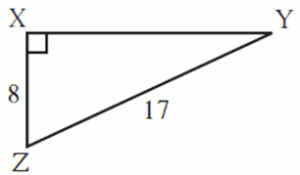
In right angled Δ YXZ,
by Pythagoras theorem, ZY2 = XZ2 + XY2
∴ 172 = 82 + XY2
∴ 289 = 64 + XY2
∴ 289 - 64 = XY2
∴ XY2 = 225 = (15) 2
∴ XY = 15
(i) sin Y = \(\frac{\text{Opposite side of ∠ Y}}{Hypotenuse}\) ∴ sin Y = \(\frac{XZ}{ZY}\) = \(\frac{8}{17}\)
(ii) cos Y = \(\frac{\text{Adjacent side of ∠ Y}}{Hypotenuse}\) ∴ cos Y = \(\frac{XY}{ZY}\) = \(\frac{15}{17}\)
(iii) tan Y = \(\frac{\text{Opposite side of ∠ Y}}{\text{Adjacent side of ∠ Y}}\) ∴ tan Y = \(\frac{XZ}{XY}\) = \(\frac{8}{15}\)
(iv) sin Z = \(\frac{\text{Opposite side of ∠ Z}}{Hypotenuse}\) ∴ sin Z = \(\frac{XY}{ZY}\) = \(\frac{15}{17}\)
(v) cos Z = \(\frac{\text{Adjacent side of ∠ Z}}{Hypotenuse}\) ∴ cos Z \(\frac{XZ}{ZY}\) = \(\frac{8}{17}\)
(vi) tan Z = \(\frac{\text{Opposite side of ∠ Z}}{\text{Adjacent side of ∠ Z}}\) ∴ tan Z = \(\frac{XY}{XZ}\) = \(\frac{15}{8}\)
Question 4. In right angled Δ LMN, if ∠N = θ, ∠M = 90°, cos θ = , find sin θ and tan θ Similarly, find (sin2 θ) and (cos2 θ).
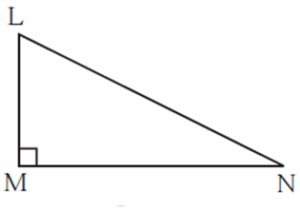
cos θ = …..(1)
Let MN be 24k, then LN = 25k. …..(2)
In right angled A LMN, by Pythagoras theorem,
LN2 = LM2 + MN2
∴ (25k) 2 = LM2 + (24k) 2
∴ 625k2 = LM2 + 576k2
∴ 625k2 - 576k2 = LM2
∴ LM2 = 49k2 =(7k)2
∴ LM = 7k …..(3)
sin θ = \(\frac{LM}{LN}\) = \(\frac{7k}{25k}\) = \(\frac{7}{25}\) …..[from (2) and (3)]
tan θ = \(\frac{LM}{MN}\) = \(\frac{7k}{24k}\) = \(\frac{7}{24}\) …..[from (2) and (3)]
sin2 θ = \((\frac{7}{25})^2\) = \(\frac{49}{625}\)
cos2 θ = \((\frac{MN}{LN})^2\) = \((\frac{24}{25})^2\) = \(\frac{576}{625}\)
Question 5. Fill in the blanks.
(i) sin20° = cos [ ]°
sin θ = cos (90 - θ)
∴ sin 20° = cos (90 - 20)° = cos 70°
Answer : 70.
(ii) tan 30° x tan [ ]° = 1
tan θ x tan (90 - θ) = 1
∴ tan 30° x tan (90 - 30)° = 1
∴ tan 30° x tan 60° = 1
Answer : 60.
(iii) cos 40° = sin [ ]°
cos θ = sin (90 - θ)
∴ cos 40° = sin (90 - 40)°
∴ cos 40° = sin 50°
Answer : 50.